

Child Development
Why Play Is the Most Serious Thing We Do at Nursery
Written by Jeanne, Owner & Director at Blooming Years Nursery

Play can look deceptively simple from the outside. A child pouring water between containers. Two three-year-olds negotiating who gets to be the shopkeeper. A toddler pressing their hands into damp soil in the mud kitchen and studying what sticks to their fingers. To an adult glancing in, it might look like nothing much is happening. But in our nurseries, we know that those moments are where some of the most significant development takes place.
I've worked in early years for a long time, and I still find it one of the most compelling things to watch: the sheer concentration a child brings to play when they're genuinely engaged. That focus is not accidental. It reflects real cognitive work.
What children are actually doing when they play
At Blooming Years, our approach is built around the principle of learning through play, and that means we take the environment and the opportunities we create very seriously. Play isn't a gap between the important bits. It is the important bit.
When a child plays, they are doing several things at once:
- Building language. Whether they're narrating their own actions, negotiating with a friend, or asking an adult a question, play generates more natural language than almost any adult-led activity.
- Developing problem-solving skills. When a block tower falls, a child has to decide what to do next. That moment of frustration and re-thinking is genuinely valuable.
- Learning emotional regulation. Sharing, taking turns, dealing with disappointment, feeling proud of something they made. These situations come up constantly in play, and working through them is how children develop resilience.
- Strengthening physical development. Climbing, running, balancing, using scissors, threading beads. Fine and gross motor skills develop through doing, not through instruction.
- Practising social skills. Understanding that other people have different ideas, learning to collaborate and compromise. These are things children can only really learn through experience with other children.
Child-led and adult-supported
One thing parents often ask us is how we balance structure with freedom. It's a fair question. In our experience, the most productive play happens when children have genuine agency over what they do, but with adults close by who can extend, support, and gently challenge.
We might notice a child who keeps coming back to the water tray and set up a problem for them to explore. We might sit alongside two children building something together and ask a question that opens up a new direction. What we try not to do is take over, or steer play towards a predetermined outcome.
Our staff across all six of our nurseries, from Barons Court in Hammersmith and Fulham through to our settings in Lambeth, Croydon, and Merton, are trained to observe carefully and intervene thoughtfully. That balance is something we talk about a lot as a team.
Outdoor play matters just as much
We take children outside every day, in all weathers. Families at our Wimbledon, Clapham, Streatham, and Croydon settings will know that we encourage children to come in comfortable clothes they can move and get muddy in. That's not incidental. Outdoor play offers things indoor play simply can't: space to run, natural materials that behave unpredictably, fresh air, and a different kind of freedom.
Our mud kitchens are a particular favourite. The mixing, pouring, measuring, and imaginative cooking that happens there involves maths, science, creativity, and social negotiation all at once. It's messy and wonderful.
Play and school readiness
Parents in Merton, Lambeth, and across south and west London sometimes ask whether a play-based approach means their child won't be ready for school. I understand why the question comes up, but in my experience, the opposite is true.
Children who have had rich play experiences arrive at school with stronger language, better concentration, more developed social skills, and more confidence to try new things and recover from setbacks. Those are exactly the qualities that help children thrive in Reception and beyond.
Formal, adult-directed learning introduced too early can actually undermine confidence, particularly in children who aren't quite ready for it. Play, done well, meets each child where they are.
What this looks like at Blooming Years
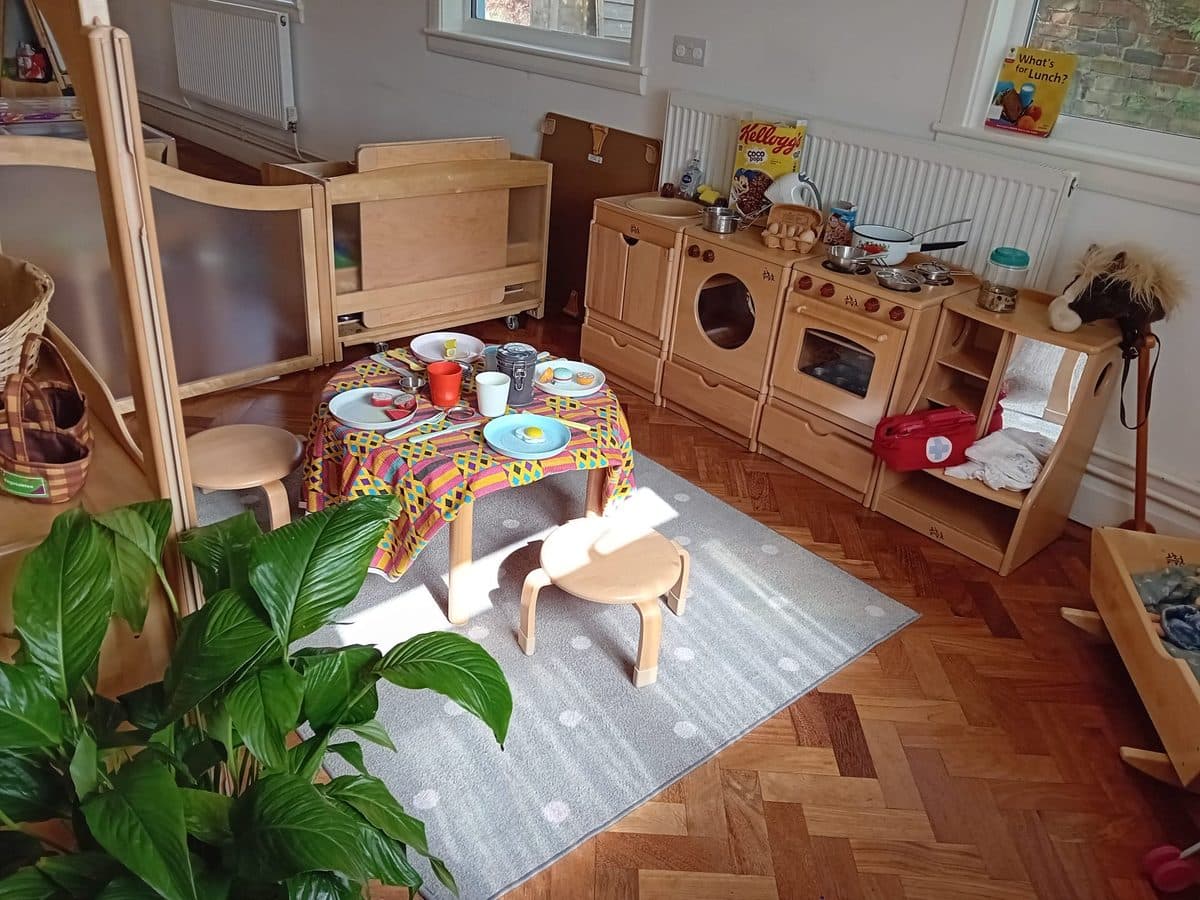
Across our six settings, we think carefully about the environments we create: what resources we put out, how spaces are arranged, how adults position themselves, and what invitations to play we offer. We review these regularly because what works for a room of two-year-olds in Streatham is not the same as what works for a group of four-year-olds in Wimbledon.
We also share what we observe with families. Parents receive daily updates, and our termly one-to-one conversations often involve us describing a moment of play that revealed something interesting about their child's thinking. Those conversations are some of my favourite parts of the job.
If you'd like to see how this looks in practice, we'd love to show you around. Book a show-around at your nearest Blooming Years nursery and come and watch the children at work. If you have questions about places or funding, our fees and funding page is a good starting point.
Come and see us for yourself
Book a relaxed tour of Blooming Years Nursery and meet our team.
Book a tourOther guides you might like
Child Development
Sleep and Development in the Early Years: What We See at Nursery Every Day
Sleep shapes almost everything in the early years, from mood and memory to how children learn and grow. Here's what we observe day to day at Blooming Years, and what it means for your child.

Child Development
Building Friendships: How We Support Social Skills at Nursery
Social skills are just as important as learning to count or recognise letters. We share how we help children develop confidence, empathy and friendships from their earliest years.

Child Development
How Nursery Helps Young Children Build Social Skills That Last
Social skills don't arrive fully formed. They develop slowly, through hundreds of small moments across the day. Here's what we see happening in our nurseries, and how you can support the same growth at home.
Frequently asked questions
How does play-based learning prepare children for school?
In our experience, children who have had genuinely rich play experiences arrive at school with strong language, good concentration, and the resilience to try new things. Play develops the social and emotional skills that underpin learning far more effectively than formal activities introduced too early.
What's the difference between free play and structured activities at nursery?
We use both, but the balance matters. Free play gives children agency and genuine ownership over what they're exploring. Structured activities have their place too, particularly for group experiences like music or storytelling. What we avoid is over-directing play, which tends to reduce engagement and curiosity rather than build it.
How does Blooming Years use outdoor play as part of children's development?
Children go outside every day across all our nurseries, in all weathers. Our outdoor spaces include mud kitchens, climbing equipment, and natural materials. Outdoor play supports physical development, creative thinking, and sensory exploration in ways that indoor environments simply can't replicate. We ask families to send children in clothes they can move and get muddy in.
Can I come and see how play works in practice at Blooming Years?
Absolutely. We encourage all families to visit before enrolling. You're welcome to book a show-around at your nearest setting, whether that's in Hammersmith and Fulham, Lambeth, Croydon, or Merton. Seeing children engaged in play during a real session is the best way to understand our approach.